 Qasas Kids
قصص النبيين للأطفالQisas an-Nabiyyin lil-Atfal
The book that has taught
Arabic to children for seventy years.
Qisas an-Nabiyyin lil-Atfal — twelve stories of the Prophets, written by Shaykh Abul Hasan Ali al-Hasani an-Nadwi for children learning Arabic, and taught in seminaries ever since.
We are making an illustrated edition of it, one story at a time. Every vowel marked, the English on the same page, every page read aloud. Volume 1, Part 1 is out now.
Ages 7 and up54 pagesArabic and English
Get Volume 1, Part 1
Already have the book? Create your parent account to open the companion, or sign in.

The stories
Four volumes, made one story at a time.
Shaykh Abul Hasan published these between 1944 and 1977. Teachers know the set as Books 1 to 5, the fifth being the Seerah — so we keep his numbering and call each story a Part of its volume, never “Book one”. Volume 1, Part 1 is printed and on sale; Part 2, Yusuf, is out very soon, and its Arabic is on the site to read already.
الجزء الأول
Volume 1
Book 1 of Shaykh Abul Hasan’s set
الجزء الثاني
Volume 2
Book 2 of Shaykh Abul Hasan’s set
- To comeسفينة نوحNuh's Ark
Part 1 · The story of Nuh
- To comeالعاصفةThe Storm
Part 2 · The story of Hud
- To comeناقة ثمودThe She-Camel of Thamud
Part 3 · The story of Salih
الجزء الثالث
Volume 3
Book 3 of Shaykh Abul Hasan’s set
- To comeقصة سيدنا موسى عليه السلامThe story of Musa
Part 1
الجزء الرابع
Volume 4
Book 4 of Shaykh Abul Hasan’s set
- To comeنظرة على القصص السابقةA Look Back at the Earlier Stories
Part 1
- To comeقصة سيدنا شعيب عليه السلامThe story of Shu'aib
Part 2
- To comeقصة سيدنا داود وسليمان عليهما السلامThe story of Dawud and Sulayman
Part 3
- To comeقصة سيدنا أيوب ويونس عليهما السلامThe story of Ayyub and Yunus
Part 4
- To comeقصة سيدنا زكريا عليه السلامThe story of Zakariya
Part 5
- To comeقصة سيدنا عيسى عليه السلامThe story of Isa
Part 6
Look inside
Read the first 10 pages.
Click the page to turn it. Open Book vocab for the new words on the page you are reading.
Page 1 of 10
10 pages of 54. The rest is in the book.
Get Volume 1, Part 1
Read along
Press play and follow the line.
This is how the story opens. The line being read lights up as you hear it — so a child can follow where they are without losing the vowels. Every page of the book is read this way.
Hear the opening of the story
And this is what you get for every page — the audio, the text, and that page’s new words. The picture stays in the book.
Hear the next page
كَلِمَاتٌ جَدِيدَةٌ
- بَيْتٌhouse
- كَبِيرٌbig / large
- هٰذَاthis
- هٰذِهِthis (f.)
- النَّاسُthe people
- يَسْجُدُونَthey prostrate / bow down
- يَسْجُدُhe prostrates
- يَعْبُدُhe worships
Start here
يَسْجُدُ
he prostrates — page 4
Three letters carry it: س ج د. Hold on to them — by the end of this page you will know why a masjid is called a masjid.
What every page holds
Three things, in the same order, every time.
The Arabic to read, the English to check yourself against, and the new words listed underneath — in that order, under the picture, never moving position. A child always knows where to look. Here is page 39 in full; the rest is in the book.
The Arabic
وَلَمَّا أَرَادَ إِبْرَاهِيمُ أَنْ يَذْهَبَ، قَالَتْ هَاجَرُ:
إِلَى أَيْنَ يَا سَيِّدِي؟ أَتَتْرُكُنِي هُنَا؟
أَتَتْرُكُنِي وَلَيْسَ هُنَا مَاءٌ وَلَا طَعَامٌ؟
هَلْ أَمَرَكَ اللهُ بِهَذَا؟
قَالَ إِبْرَاهِيمُ: نَعَمْ!
قَالَتْ هَاجَرُ: إِذًا لَا يُضَيِّعُنَا!
The English
When Ibrahim was ready to go, Hajar said,
"Where are you going, my master? Are you leaving me here?
Are you leaving me where there is no water and no food?
Has Allah commanded you to do this?"
Ibrahim said, "Yes!"
Hajar said, "Then He will never let us be lost!"
The new words
- لَمَّاwhen
- سَيِّدِيmy master
- أَتَتْرُكُنِيare you leaving me
- مَاءٌwater
and 4 more on this page. Each word is introduced once, and only once, across the whole book — 285 of them in total.
Inside the book
Drawn for the story, not decorated around it.
50 illustrated pages, one scene each. The hard parts of the story are told plainly in the text and left undrawn — restraint belongs in the picture, never in the telling. Ibrahim (as) is never drawn: some pages show what he sees, on others he simply is not in the frame. Three of them:
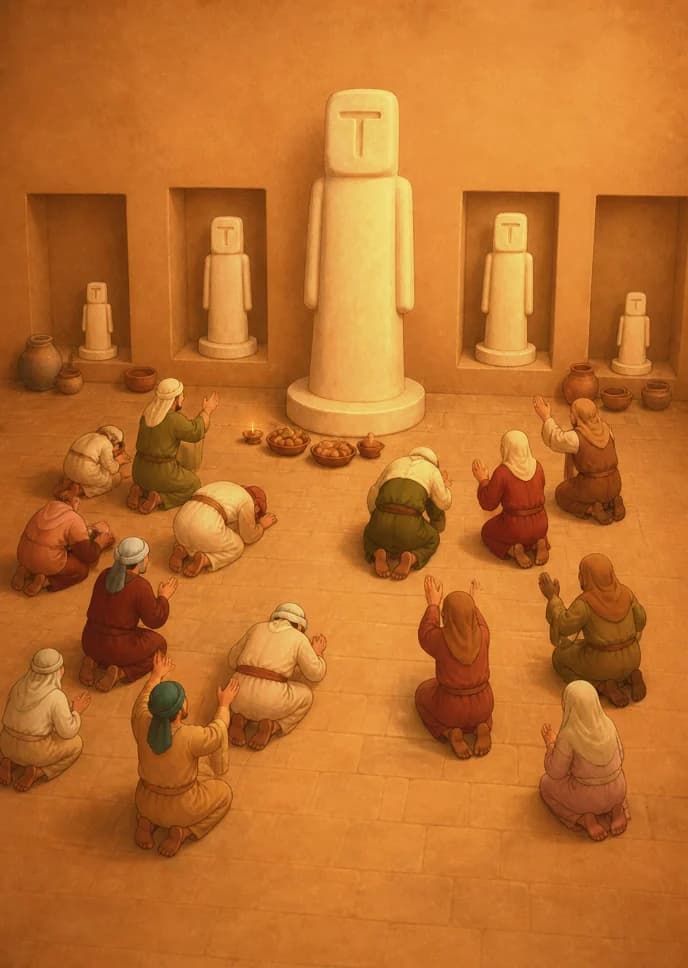
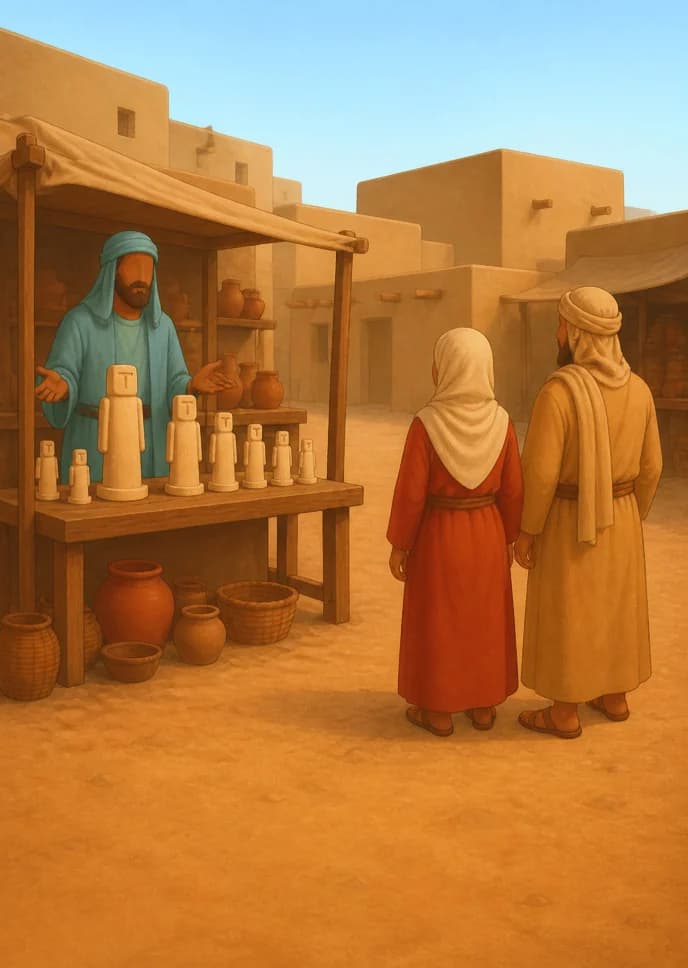
Page 4 · The house of idols
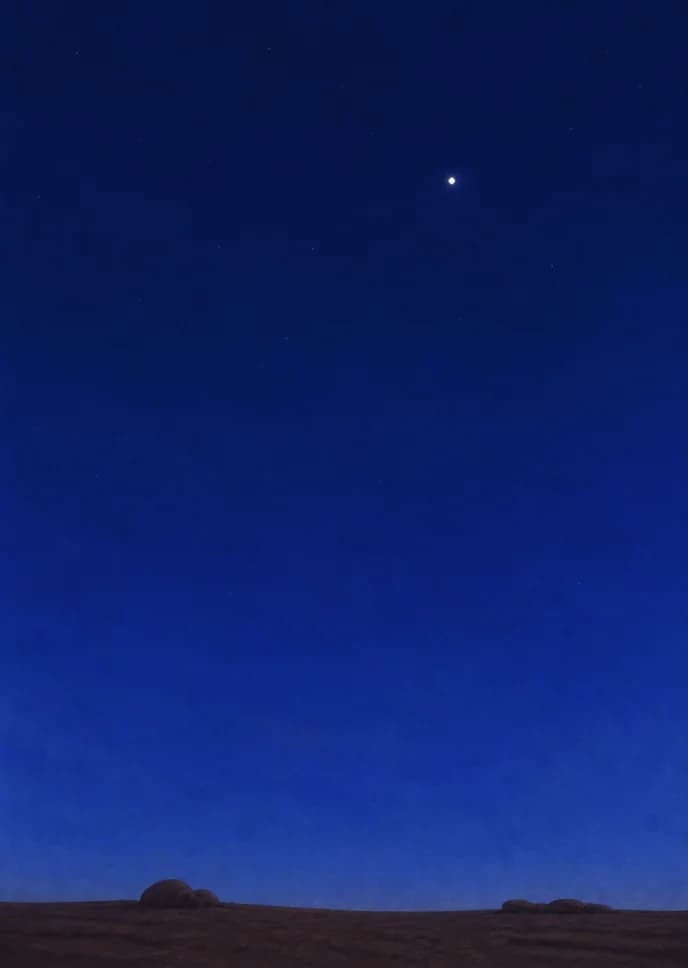
Page 19 · A star in the night sky

Page 21 · The sun, rising
And from Part 2, the story of Yusuf (as) — out very soon. He is never shown either: here, the dream as he saw it, and the places it led him.
Page 3 · Eleven stars, the sun and the moon
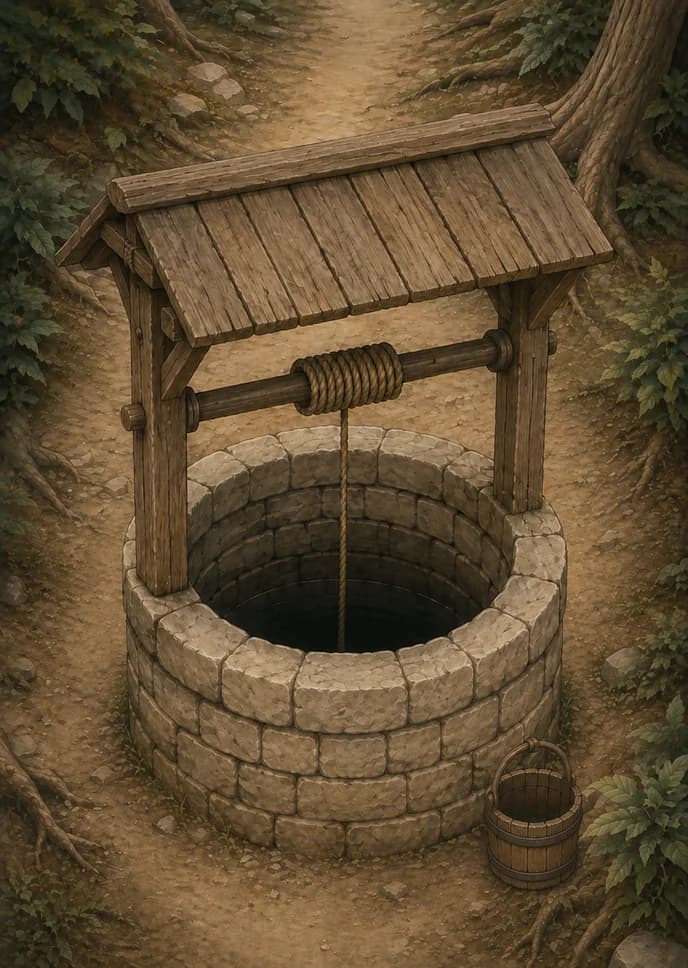
Page 10 · The well
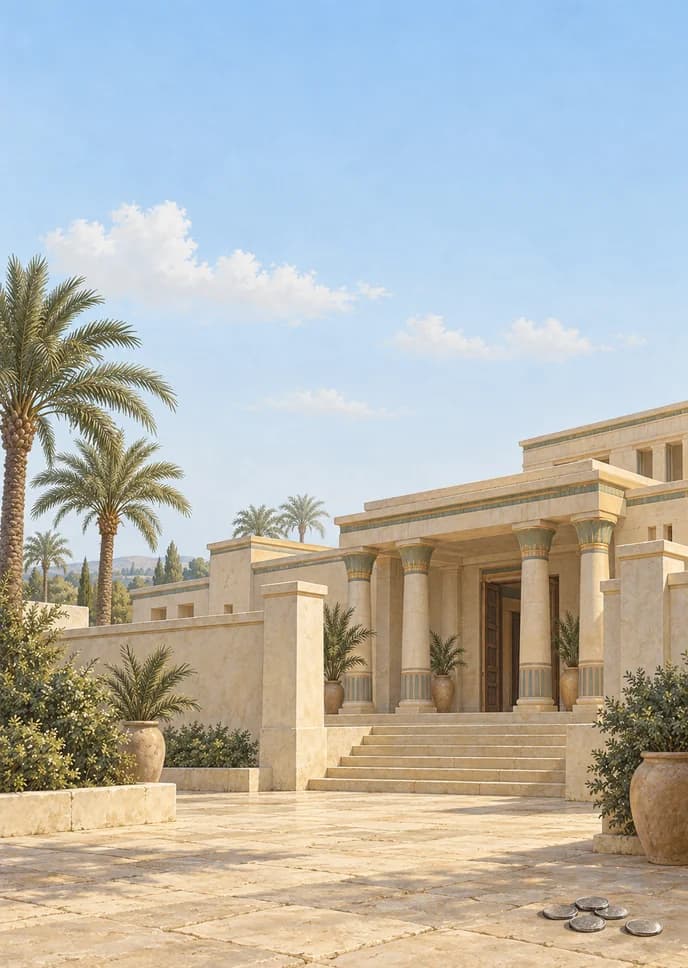
Page 16 · The Aziz's palace in Egypt
Words come in families
The words are related. A child can see it.
Three letters, and a family of words grows out of them. There is no grammar here and no terminology — just the same three letters, turning up again in a word the child already met. 32 families run through this book.
- يَسْجُدُhe prostratespage 4
- يَسْجُدُونَthey prostrate / bow downpage 4
- الْمَسْجِدُthe masjidpage 52
Every page number is a link. That is what the website adds to the printed appendix — the connections are followable, so a child can jump back to the picture the word belongs to.
Hear it read
One code in the book. Every page read aloud.
Scan once and the whole book is here to listen to — turn to any page and hear it, with the words and the family beside it. No scanning a fresh code every page, no account, no advertising, and it never starts playing on its own.
Read the first ten pages →Fully vowelled
Every word carries its tashkeel, on every page — the marks are the lesson, not a decoration.
Nothing cut
The story follows Shaykh Abul Hasan's original. Difficult episodes are told plainly rather than removed.
Never drawn
Ibrahim (as) is not depicted at all: not featured, not blank-faced, not shown from behind. Some pages show what he sees; on others he simply isn't in the frame.
Practice
Reading it is one thing. Try producing it.
Every practised page has its own exercises, built from that page’s own words and sentences — match the meaning, finish the sentence, put the words in order, or build a new sentence just like it. This is the real thing, live, from page 4:
50 pages have exercises so far (pages 3–52), with more on the way.
1 of 5
Match each word to its meaning.
Tap an Arabic word first, then its meaning.
What you get
A printed book, and everything that makes it readable.
THE BOOK
- 54 pages, illustrated throughout
- Fully vowelled Arabic on every story page
- English underneath, never in place of the Arabic
- New words glossed on the page they appear
- Word-family appendix at the back
THE COMPANION
- Every story page read aloud — an AI voice, checked by a human
- The line lights up as it is read
- All 285 words, searchable
- 32 word families to explore
- Practice on all 50 story pages
On this site, on any device. Nothing to install.
Next in the series
Part 2 is the story of Yusuf.
OUT VERY SOON — THE ARABIC IS UP NOW
The dream, the well, the years in Egypt, and the brothers who came looking for food and did not know who was feeding them. Shaykh Abul Hasan tells it in twenty-five short chapters, and this edition keeps every one of them.
All 57 pages of his Arabic are on the site now, fully vowelled — read the opening below, no account needed. The printed book, with its pictures, recordings and word lists, is out very soon.
PAGE 3
كَانَ يُوسُفُ وَلَداً صَغِيراً، وَكَانَ لَهُ أَحَدَ عَشَرَ أَخاً.
وَكَانَ يُوسُفُ غُلاماً جَمِيلاً، وَكَانَ يُوسُفُ غُلاماً ذَكِيًّا،
وَكَانَ أَبُوهُ يَعْقُوبُ يُحِبُّهُ أَكْثَرَ مِنْ جَمِيعِ إِخْوَتِهِ.
ذَاتَ لَيْلَةٍ رَأَى يُوسُفُ رُؤْيَا عَجِيبَةً.
رَأَى أَحَدَ عَشَرَ كَوْكَباً، وَرَأَى الشَّمْسَ وَالْقَمَرَ؛ كُلٌّ يَسْجُدُ لَهُ.
تَعَجَّبَ يُوسُفُ الصَّغِيرُ كَثِيراً! وَمَا فَهِمَ هٰذِهِ الرُّؤْيَا،
كَيْفَ تَسْجُدُ الْكَوَاكِبُ، وَالشَّمْسُ، وَالْقَمَرُ لِرَجُلٍ؟
1 of 8 free · 57 in the book
Part 2 opens the way Part 1 does. Buy the book, add the order to your account, and its companion opens for a year.
One last thing
الْمَسْجِدُ
the masjid — page 52
A masjid is the place where you make sujud. The same three letters you met on page 4, 48 pages later — and nobody had to explain it.
That is the whole idea of this book.